Menopause and your hair

Hair longevity

Menopause and your hair

The change is hormonal, and so is what happens to your hair. Here is the science, the signs, and the K18 routine to help keep your hair strong through it.

~10 yrs The menopause transition can span
55%+ of women show pattern hair change by their 70s
4 min To rebuild bonds with K18 repair
Patented K18PEPTIDE molecular technology

If your hair feels different lately - finer through the lengths, flatter on top, or shedding more than it used to - you are not imagining it, and you are far from alone. Around the menopause transition, the hormones that shaped your hair for decades begin to shift, and your hair responds. This is not damage the way heat or bleach is; it is a change in the biology of the follicle itself. Understanding it makes it far easier to look after, and to build the right routine around - with a look at what comes next from K18.

The biology

What actually changes, and why

Your scalp follicle is an oestrogen-sensitive tissue. As oestrogen falls and androgen influence becomes relatively stronger, the way your hair grows changes with it.

Oestrogen decline across the menopause transition Oestrogen, which supports the hair follicle, falls across perimenopause and menopause while relative androgen influence rises, creating a window in which hair becomes more sensitive to change. Hair-sensitive window Oestrogen Relative androgen influence Perimenopause Menopause Postmenopause Hormone level
The scalp follicle is oestrogen-sensitive. As oestrogen falls and androgen influence becomes relatively stronger, the growth cycle shifts.1
Follicle miniaturisation Over time a thick terminal hair can be gradually replaced by finer, shorter hair as the follicle miniaturises and spends less time in the growth phase. Scalp Terminal Growth-dominant Miniaturising Shorter cycles Vellus Finer, shorter Over the transition
The growth phase shortens and terminal hairs are gradually replaced by finer ones, so hair reads as less dense even before much has been shed.2

Is this you

The signs to look for

Menopausal hair change is usually gradual and diffuse, not a single dramatic loss. A few of these together is the pattern worth noticing.

Less density on top

Your part looks wider, or your ponytail feels thinner than it used to.

Finer strands

Individual hairs feel softer and thinner, even where you have not lost length.

More shedding

More hair on the brush, in the shower or on the pillow than is normal for you.

Slower regrowth

Hair takes longer to grow back and does not reach the length it once did.

A drier, more sensitive scalp

The scalp feels tighter, drier or more reactive than it did before.

Changed texture

Smooth hair turns wiry or frizzy, or your waves and curls start to loosen.

01

The hormones behind the change

For most of your life, oestrogen has quietly worked in your hair's favour. Scalp follicles carry oestrogen receptors, and oestrogen helps keep hairs in their active growing phase for longer. As you move through perimenopause and into menopause, ovarian oestrogen production winds down, and the balance tips.

Oestrogen's supportive effect on the follicle fades, and the androgens your body still produces have a relatively stronger influence. In follicles that are genetically sensitive, that nudges hairs towards a shorter growth cycle and a finer shaft. It is the same biology behind female pattern hair loss, brought forward by the hormonal shift, which is why the change is usually gradual and diffuse rather than sudden.

Find your routine
02

The hair growth cycle, and why it shifts

Every hair moves through a cycle: a long growth phase, a brief transition, and a resting phase before it sheds and a new one begins. Most of your scalp hair is normally growing at once, which is why healthy hair feels dense.

With lower oestrogen, the growth phase shortens and the resting phase lengthens. More hairs rest and shed together, and each new hair grows in shorter and finer. Over cycles, follicles can miniaturise - the diagrams above show this - and density falls before any single dramatic loss. Nothing topical changes the hormones, but good care protects the hair you are growing.

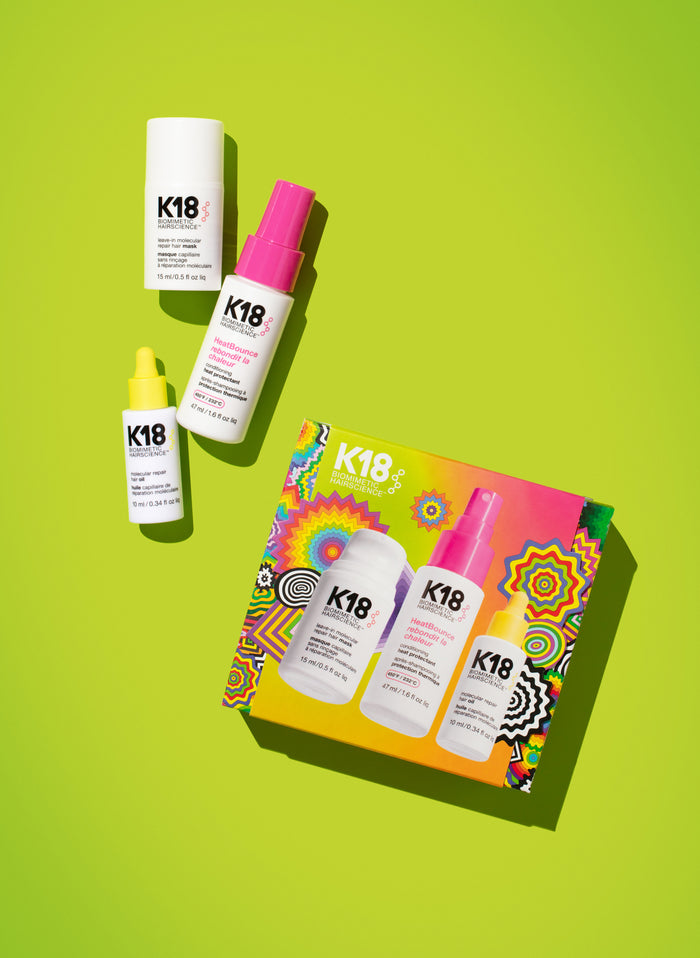
*K18 leave-in molecular repair hair mask 5ml

The one to start with

*K18 leave-in molecular repair hair mask 5ml

A leave-in that reconnects broken keratin bonds, so finer, more fragile hair holds its strength.

$16.95

Shop *K18 leave-in molecular re
03

Where K18 molecular repair fits

K18 does one thing exceptionally well: it repairs the internal bonds that give hair its strength. The patented K18PEPTIDE is small enough to reach into the cortex and reconnect the keratin chains that break through colouring, heat and everyday wear. For hair that is already becoming finer with menopause, that structural support matters more, not less - there is simply less hair to lose to breakage.

It will not change your hormones or bring back density on its own. What it does is keep the hair you are growing as strong, smooth and resilient as it can be, so it behaves better and breaks less. It is cosmetic care, not a medical treatment - and for finer hair, it earns its place.

Shop molecular repair

Where to start today

A gentle, bond-repair routine for changing hair

Finer, more fragile hair needs less stress and more support. Three steps, built around K18 molecular repair, that each earn their place.

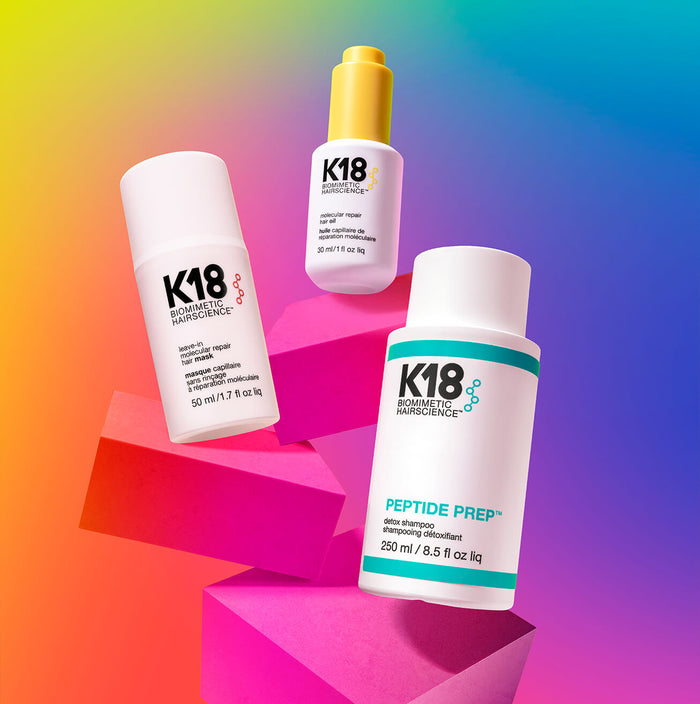
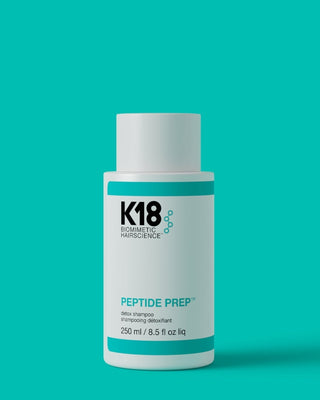
Step 01 - Cleanse *PEPTIDE PREP™ detox shampoo 250ml

*PEPTIDE PREP™ detox shampoo 250ml

A gentle clarifying cleanse that clears build-up and hard-water minerals without stripping fragile hair.

  • Resets the hair so treatment can work
  • Gentle enough for finer, drier lengths
  • Balances the scalp before you repair

$59.95

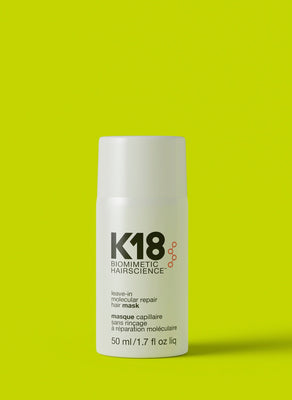
Step 02 - Repair *K18 leave-in molecular repair hair mask 5ml

*K18 leave-in molecular repair hair mask 5ml

The hero. A leave-in mask that reconnects broken keratin bonds in about four minutes, no rinse needed.

  • Rebuilds strength and elasticity from the inside
  • Helps finer hair resist breakage
  • Results build with every wash

$16.95

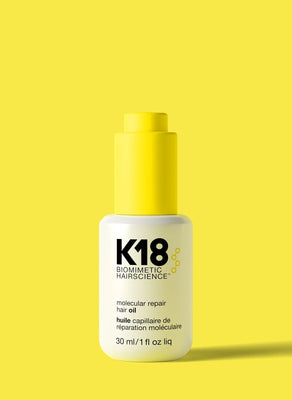
Step 03 - Protect *K18 molecular Repair Hair Oil 30ml

*K18 molecular Repair Hair Oil 30ml

A weightless molecular oil that smooths, adds shine and protects against heat up to 230C.

  • Locks in the repair and tames frizz
  • Heat protection for everyday styling
  • Light enough not to weigh fine hair down

$94.95

Build the full routine and keep your hair strong through the change.

Shop the routine

Coming soon to Australia

FutureIQ: acting earlier on hair ageing

Menopause is one of the hormonal shifts behind what K18 calls premature hair ageing - the connected signs of increased shedding, early greying and scalp change that share the same underlying biology. FutureIQ is K18's first step into hair longevity: a nightly biomimetic serum, powered by MultiVital technology, made to support the scalp and follicle environment before those signs accelerate.

It is a different job to molecular repair, which strengthens the hair you already have. FutureIQ works lower down, at the root.

  • Oxidative defence
  • Follicle anchoring
  • Pigmentation support
  • Scalp resilience
Register your interest A nightly hair longevity serum. Australian availability to be announced.
K18 FutureIQ

What a consistent routine can look like

Everyone is different, and this is a general guide rather than a promise. Consistency matters far more than any single treatment.

Wash 1

Hair feels smoother and stronger straight away, and combs through with less drag.

Weeks 1 to 2

Less breakage as you brush and style. Finer lengths hold together better.

Weeks 3 to 4

Hair looks healthier and more manageable, and ends look less wispy and frizzy.

Ongoing

Keep the routine going. Strong, well-cared-for hair is the best canvas as things change.

K18 results

Real hair, real results

See what molecular repair looks like on real hair, in real conditions.

View before and after

Get a second opinion

When to see a professional

Menopause is a common reason for hair to change, but it is not the only one. Thyroid changes, iron and vitamin levels, stress and some medications can all thin hair too, and they are worth ruling out. If your shedding is sudden, patchy, or comes with an itchy or sore scalp, see your GP or a dermatologist.

For the cosmetic side - cut, colour and a routine that suits finer hair - a K18 stylist is a good place to start.

Common questions

Does menopause really cause hair loss?

Menopause does not cause hair loss for everyone, but hormonal change is a very common reason hair becomes finer and less dense in midlife. As oestrogen falls, the growth cycle shifts and follicles can gradually miniaturise. It is usually diffuse thinning rather than bald patches. If your loss is sudden or patchy, see a GP, as other causes may be involved.

Will K18 regrow my hair?

No, and any product that promises to is worth treating with caution. K18 is a cosmetic bond-repair range. It strengthens and improves the hair you have so it breaks less and looks healthier, which matters more when hair is finer. It does not change hormones or treat hair loss. For that, speak to a doctor about medical options.

Is menopausal hair change permanent?

The hormonal shift itself is permanent, but how your hair looks is not fixed. Good care protects the hair you grow, medical options can help some people, and small changes to cut and colour make a real difference. Many women keep hair they are happy with through and after menopause.

How is this different from bleach or heat damage?

Bleach and heat damage the hair fibre from the outside in. Menopausal change happens at the follicle, in the biology of how hair grows. They can overlap, and both benefit from bond repair, but only one is about hormones. If you also colour or heat-style, protecting the fibre becomes even more important.

What is FutureIQ, and when is it available?

FutureIQ is K18's new nightly hair longevity serum, made to support the scalp and follicle environment and the biology behind premature hair ageing. It is a different job to molecular repair. Australian availability is still to be announced - register your interest to hear first.

Where should I start?

Start gentle and consistent: a mild cleanse, K18 molecular repair to keep hair strong, and a protective oil for heat and frizz. If you are not sure, find your routine or see a K18 stylist.

A note on your health

This page is general information about hair and the menopause transition. It is not medical advice, and it is not a diagnosis or treatment for hair loss or any medical condition. K18 haircare products are cosmetic products that support the strength, feel and appearance of hair; they are not medicines and do not claim to treat hair loss. If you are worried about hair loss, or it is sudden, patchy or distressing, please speak to your GP or a dermatologist. See our full disclaimers for more.

Strong hair through the change starts with the next wash

You cannot pause the hormones. You can support the hair you have, starting today.

Shop the routine