

Two people can have hair that looks identical from a metre away and still have completely different hair on a molecular level. That is the tension at the heart of hair density vs hair thickness. One describes how many strands you have, the other describes how wide each strand is, and the two rarely move together.
Getting this straight matters because almost every product decision downstream depends on it. The shampoo that gives one person volume flattens another, and that is not marketing spin. Because density and strand diameter differ from head to head, the same formula can add lift on one person and drag another down, a point hair scientists make repeatedly when comparing hair types. The oil that adds shine to a coarse strand suffocates a fine one. So before you buy anything, it pays to know which measurement you are actually working with.
Below you will learn how to tell density from thickness, why porosity often matters more than either, how to test your own hair at home, and how to build a routine that respects the strands you were born with.
What Is Hair Density And How Do You Measure It
Hair density refers to the number of individual strands growing from your scalp, usually counted per square centimetre. This is well established across hair-restoration and consumer-health sources, and medical guidance defines density as a count per unit of scalp area rather than a measure of strand size. It is a headcount, not a size measurement. Someone with high density has a lot of hair follicles packed close together, which reads as a full, dense look regardless of how fine each strand is.
How Do You Check Your Hair Density At Home
You do not need a lab. A simple mirror test gives a useful estimate.
-
Start with dry, unstyled hair so nothing is faking volume.
-
Part your hair down the middle and look at how much scalp shows through.
-
Little to no visible scalp suggests high density.
-
A moderate strip of scalp suggests medium density.
-
Clearly visible scalp along the parting suggests lower density.
Density can change over a lifetime. Research backs this up. Hormonal shifts, stress, nutrition and ageing all influence how many strands stay in the growth phase, and clinical guidance notes that ageing-related hormonal changes, stress and dietary habits can all affect density over time. Peer-reviewed reviews on nutrition and hair health reach the same conclusion, though the size and reversibility of any change vary from person to person. A drop in density is often more noticeable than a change in thickness because your eye reads coverage first.
What Is Hair Thickness And Why Is It Different
Hair thickness, sometimes called strand diameter or calibre, describes how wide a single hair is. This is strongly influenced by genetics and does not change based on how many strands you have. Genetic research shows that multiple genes play a major role in setting strand diameter, which is why you can have thin, fine strands in enormous numbers, or thick, coarse strands that are sparse across the scalp.
How Do You Test A Single Strand For Thickness
Pluck one clean strand and roll it between your fingertips.
-
If you can barely feel it, your strands are fine.
-
If you feel a distinct thread, your strands are medium.
-
If it feels wiry and obvious, your strands are coarse.
Another quick check is the sewing thread comparison. Hold a strand next to a standard piece of thread. Thinner than the thread points to fine hair. Similar width suggests medium. Noticeably thicker suggests coarse hair.
The community observation worth flagging here is that people want clear, repeatable ways to classify their hair. Simple checks like the finger-roll and thread comparison are commonly recommended precisely because they are easy to understand, though it is worth remembering these are practical estimates rather than validated clinical measurements. Vague labels frustrate everyone, and these tests at least give you a language to work with.
Which Is Which When You Compare Density And Thickness
The fastest way to lock this in is to see the two side by side. Density is about quantity. Thickness is about the individual strand. They are independent variables, which is why the four combinations below all exist in real life.
|
Attribute |
Hair Density |
Hair Thickness |
|---|---|---|
|
What it measures |
Number of strands per area |
Width of a single strand |
|
How you test it |
Scalp visibility at the parting |
Rolling one strand between fingers |
|
What changes it |
Hormones, age, stress, health |
Mostly genetics |
|
What it affects most |
Overall coverage and fullness |
Weight, texture and product tolerance |
|
Common misread |
Mistaken for thickness when hair looks full |
Mistaken for density when strands feel coarse |
Can You Have High Density And Fine Hair At The Same Time
Absolutely, and it is common. Plenty of people have a huge headcount of very fine strands. The result looks full but behaves delicately, tangles easily and loses volume when weighed down. The opposite also happens, where sparse but coarse hair looks thinner than it feels in the hand. Knowing your combination is the point.
Why Does Porosity Often Matter More Than Thickness
Here is the plot twist most product advice skips. When it comes to how your hair actually responds to treatments, porosity often carries as much weight as thickness or density. Porosity describes how easily your hair takes in and holds onto moisture and active ingredients, and it can quietly override the rules you thought applied to your strand size. To be fair, the evidence here is more about emphasis than a strict ranking. Guidance from bodies like the cosmetic chemists' community treats porosity as a key driver of product choice, while strand diameter and density still matter for styling and product load, so think of them as working together rather than one always trumping the others.
What Is Hair Porosity And How Do You Test It
Porosity comes down to how open or closed the cuticle, the outer layer of the hair, sits along the strand. A common at-home check is the float test.
-
Drop a clean, product-free strand into a glass of water.
-
If it sinks quickly, you likely have high porosity.
-
If it floats for a while before sinking, you likely have low porosity.
-
If it hovers in the middle, you are probably in the balanced range.
Low porosity hair has a tightly packed cuticle that resists letting things in, a description echoed across dermatology-informed sources including consumer-health guidance. High porosity hair, on the other hand, often results from chemical, colour or heat damage that lifts the cuticle, so it soaks up product fast but struggles to hold moisture. Evidence-based care tips confirm this pattern, while also noting high porosity can sometimes be genetic. That single trait can change your entire routine.
How Does Porosity Change Product Choices
A widely shared observation is that low porosity hair does not always play nicely with heavy protein or keratin products, because the cuticle simply will not open enough to use them well. That said, the picture is not black and white. Some low porosity hair tolerates small amounts of hydrolysed protein, especially when strands are chemically damaged and genuinely need strengthening, so response varies by hair condition and formulation. High porosity hair often welcomes repair actives because it genuinely needs help closing gaps in the strand.
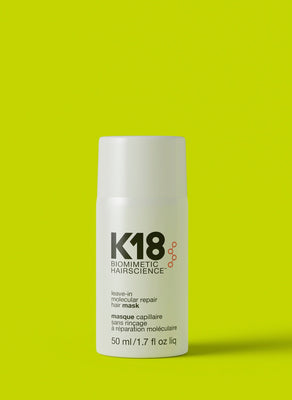
This is exactly where molecular repair earns its place. Rather than sitting on the surface, targeted peptide treatments work inside the strand to reconnect broken bonds where damage has left the hair weak and porous. If your strands feel rough, stretchy when wet, or thirsty no matter how much conditioner you use, that is a signal to look at repair rather than more coating. The K18 leave-in molecular repair hair mask is built for precisely that job, restoring strength from the inside on damaged, high porosity hair.
How Do Oils Behave Differently On Fine And Coarse Hair
Oils are where the density vs thickness question becomes very practical, very fast. The wrong oil on the wrong strand is one of the quickest ways to sabotage an otherwise good routine.
Why Does Coconut Oil Weigh Down Fine Hair
A consistent pattern reported by people with fine strands is that coconut oil tends to leave fine hair limp and greasy. Consumer-health and professional sources, including stylist guidance, agree that coconut oil can weigh down fine or thin hair and leave it looking flat. The exact reason is debated. Some sources point to its weight, others to its molecular structure and how it penetrates the strand, so the practical takeaway is stronger than the mechanism behind it. Either way, fine strands have very little structural weight to carry it, and the result is flat, oily-looking hair rather than the nourished finish the oil promises on coarser hair.
Which Lightweight Oils Suit Fine Hair Better
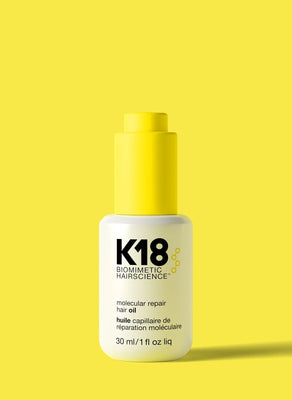
Lighter oils are the safer bet for fine and low density hair, and even then, restraint is everything. Hairstylists and hair-care experts consistently note that argan oil can flatter fine hair when used sparingly, adding shine and smoothness without the greasy drag, a point echoed in expert-led coverage. The catch is that the same benefit disappears the moment you overapply. Other lightweight options such as hemp seed oil are often mentioned in the same breath, though suitability still varies strand to strand.
-
Fine hair generally prefers lightweight oils applied in tiny amounts, mid-length to ends only.
-
Coarse hair can usually handle richer oils and more generous application.
-
Whatever your strand size, start with less than you think you need and build up.
The heuristic to remember is simple. Heavier oils reward coarse, thirsty strands. Lighter oils, used with a light hand, suit fine strands that flatten easily.
What the evidence shows about density, thickness and porosity
-
Density and thickness are genuinely different traits. Density counts your strands per unit of scalp, while thickness measures the width of each one, and the two move independently.
-
Genetics strongly shape strand diameter, which is why thickness stays fairly stable even as density shifts.
-
Density can change across a lifetime. Ageing, hormones, stress and nutrition can all play a role, though how much and how reversibly varies person to person.
-
Porosity is a powerful guide for product choice. High porosity hair often follows chemical, colour or heat damage and struggles to hold moisture, while low porosity hair resists letting products in.
-
The idea that porosity always matters more than thickness is not settled. It is a strong influence on how hair responds to treatments, but strand size and density still matter for styling and product load.
-
Simple home tests give useful estimates rather than clinical readings, so treat the finger-roll, thread and float checks as a starting language, not a lab result.
How Do You Build A Routine Around Your Own Hair
Once you know your density, thickness and porosity, a routine almost designs itself. The goal is to add strength and shine without crushing volume or starving the strand.
What Steps Suit Fine Or Low Density Hair
-
Reach for lightweight, volumising formulas that clean without residue.
-
Keep conditioner and oil away from the roots to protect lift.
-
Prioritise internal repair over heavy surface coating when hair is damaged.
What Steps Suit Coarse Or High Density Hair
-
Use richer conditioning to soften and control texture.
-
Apply oils more generously through mid-lengths and ends.
-
Layer smoothing steps to tame frizz and add slip.
Explore focused options across the K18 treatment collection to find repair-first formulas, or browse the full K18 hair care range to match a routine to your strands.
[tip-text="Do the strand and float tests on the same day so you know your thickness and porosity together. That pairing tells you more about product choice than either result on its own."] [collection-carousel="bestsellers"]
How Can We Help You Repair And Maintain Your Hair
Whether your hair is fine and dense, coarse and sparse, or somewhere in between, damage is the great equaliser. Colour, heat and chemical services raise porosity and weaken strands, which is when even the best oils and shampoos struggle to deliver.
Next steps that make sense for most people include:
-
Run the parting, strand and float tests to confirm your density, thickness and porosity.
-
Choose lighter or richer conditioning based on your strand size.
-
Add molecular repair if your hair reads as damaged or high porosity.
-
Maintain results with a clean, balanced wash-day routine.
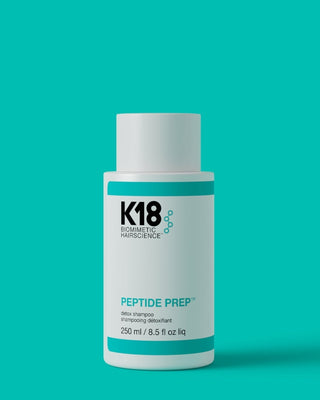
For hair that has been through the wringer, a reset can help. The K18 detox shampoo and repair mask routine bundle clears build-up and rebuilds strength in the same routine, giving you a clean canvas to work from.
[product-feature="k18-leave-in-molecular-repair-hair-mask-5ml"] [collection-carousel="maintenance-routine"]
Results vary with the state of your hair, and severe damage or sudden changes in density are always worth discussing with a professional stylist or a healthcare provider where appropriate.
What Should You Take Away About Density And Thickness
Hair density counts your strands. Hair thickness measures each one. These are distinct characteristics, as hair experts explain in plain terms, and they move independently, which is why full-looking hair can still be delicate and sparse hair can still feel coarse.
Porosity strongly shapes how your hair truly behaves, so test for it before you spend on products. Match your oils to your strand size, keep application light where hair is fine, and lean on internal repair when damage has raised porosity. Do that, and you stop guessing and start working with the hair you actually have.
