

You spot a halo of short hairs standing up around your part. Cue the spiral. Is this hair finally coming back, or is it snapping off?
It matters, because the two require opposite responses. New growth means keep doing what you are doing. Breakage means change something now.
Good news. You can tell the difference in about thirty seconds, with no equipment and no appointment.
The Tip Test Settles It
This is the one that answers the question. Pull one of the short hairs out from the rest, hold it against a light background, and look at the end.
-
Tapered to a fine point. That is new growth. A hair that has never been cut or broken narrows to a soft, wispy tip.
-
Blunt, squared off or split. That is breakage. A fractured hair leaves a flat or ragged end, because it has been torn rather than grown.
It is genuinely that simple. A tapered tip cannot be faked, because taper only happens at the growing end of a brand new hair.
Worth knowing about the split version too. Trichorrhexis nodosa and ordinary split ends both show up as fraying along the shaft rather than a clean point. Neither is regrowth.
[tip-text="Do the tip test in daylight against a white surface. Phone torch plus a bathroom mirror is how people misread this and panic unnecessarily."]
Three Things, Not Two
Most people frame this as growth or breakage. There is a third option, and mixing it up sends you down the wrong path entirely.
|
What it is |
The giveaway |
|
|---|---|---|
|
New growth |
Fresh hair emerging |
Tapered tip, short, near the scalp |
|
Breakage |
Shaft snapping mid length |
Blunt or split end, no root bulb |
|
Shedding |
Whole hair leaving the follicle |
Full length, small pale bulb at the root |
Shedding and breakage are completely different problems. Shedding happens at the follicle. Breakage happens along the shaft. A shed hair comes away with a tiny white bulb attached. A broken hair never does.
If that distinction is the part you are stuck on, our guide to shedding versus breakage goes deeper.
Do The Maths On Length
A second check, and it is surprisingly decisive.
Scalp hair grows roughly one centimetre a month. So work backwards from the length of those short hairs.
Three centimetres means about three months of growth. Does something three months ago explain it? An illness, a birth, a period of real stress, a crash diet? Then you are almost certainly looking at regrowth.
Nothing happened three months ago, but you did bleach it, or you have been wearing the same tight ponytail every day? Different story.
Where It Shows Up Tells You Plenty
New Growth Clusters
Regrowth after a shedding episode tends to appear as a fairly even band of short hairs, most obviously along the hairline and through the part.
That pattern is classic telogen effluvium recovery. A trigger pushes a lot of hairs into the shedding phase at once, they fall over the following months, and then they all come back at once too. Postpartum hairline fluff is the version everyone recognises.
Breakage Follows Stress Points
Breakage is not democratic. It shows up exactly where force is concentrated.
-
Where you tie it. A distinct band of short hairs at ponytail height is mechanical, not miraculous.
-
The crown and mid lengths, where heat tools spend the most time.
-
Around the face, where hair is finest and gets straightened most often.
-
Underneath, where friction against collars and bag straps builds up.
Even, all over, near the scalp points to growth. Concentrated in a band or a zone points to breakage.
Why Breakage Happens
Three culprits do most of the damage, and they compound.
Chemical
Bleaching measurably reduces the tensile strength of hair. Lightened hair is not just drier, it is structurally weaker, so it fails at forces virgin hair shrugs off. Our guides on preventing bleach damage and repairing bleached hair cover that ground properly.
Mechanical, Especially When Wet
Here is the one people underestimate. Water swells the hair shaft and changes its mechanical behaviour, which is why wet hair is more vulnerable than dry.
Brushing hard through soaking hair, piling it on your head in a towel and rubbing it dry are the three fastest routes to a band of snapped ends.
Thermal
Repeated high heat on hair that is already compromised is the accelerant. It rarely acts alone, but it finishes the job.
The pH Mistake Everyone Is Making
Worth flagging because this advice circulates constantly and it is actively harmful.
Healthy hair and scalp sit at a naturally acidic pH of roughly 4.5 to 5.5. Alkaline products push that upwards, which swells the cuticle, lifts its scales and leaves the shaft exposed.
Which brings us to the baking soda trend. Sodium bicarbonate sits around pH 9. That is dramatically more alkaline than your hair wants, and washing with it is a reliable way to manufacture the exact breakage you were trying to fix.
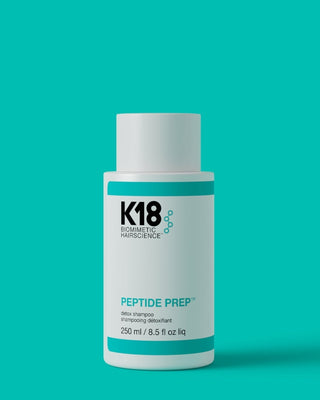
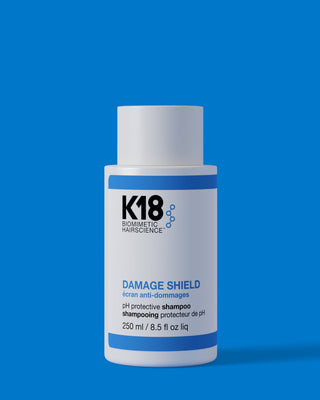
Keep your cleanser in the right pH range and you remove an entire category of damage. That is the whole thinking behind our damage shield pH protective shampoo.
[product-feature="damage-shield-ph-protective-shampoo"]
The Stretch Test, With A Caveat
A second diagnostic that circulates widely. Take a wet strand, hold it at both ends and pull gently.
Hair with healthy elasticity gives a little and springs back. Hair that stretches a long way and stays stretched, or feels soft and mushy, has lost structural integrity. If it snaps immediately with no give, it is brittle.
The caveat matters though. This tells you something is wrong with the internal structure. It does not reliably tell you whether the answer is protein or moisture, despite how confidently that gets asserted online.
If your hair is behaving like this, our pieces on over elastic hair and gummy hair deal with the two ends of that spectrum.
So It Is Breakage. Now What?
-
Stop the mechanism first. Loosen the ponytail, drop the heat, cut the bleach frequency. Repair cannot outrun ongoing damage.
-
Be gentle when wet. Squeeze, do not rub. Detangle with fingers or a wide tooth comb, from the ends upward.
-
Fix your pH. The cheapest structural upgrade available.
-
Repair the structure, rather than coating it. Conditioners smooth the surface. Broken bonds inside the shaft need addressing directly.
-
Trim the damage off. Split ends travel upward. No product reverses a split.
-
Give it time. At a centimetre a month, visible improvement is a season, not a weekend.
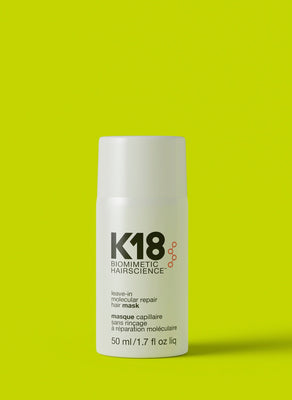
Our leave in molecular repair hair mask is built for step four, working inside the shaft rather than sitting on it.
[product-feature="k18-retail-leave-in-molecular-repair-hair-mask-50ml"]
[collection-carousel="treatment-routine"]
So It Is Growth. Now What?
Congratulations. Do less.
New hairs are fine, short and fragile, and the temptation is to attack them with product or flatten them into submission. Both create the breakage you just escaped.
-
Skip heavy styling on the new growth.
-
Avoid tight styles that put tension straight onto the shortest hairs.
-
Keep the protective habits that got you here.
-
Accept a few months of fluff. It is temporary and it is a good sign.
[collection-carousel="maintenance-routine"]
When To See A Professional
Self diagnosis has limits, and some presentations need a proper look.
Book in if you see visible scalp where there was not any before, if shedding has continued heavily beyond about six months, if there is redness, itching, scaling or pain, or if hair is coming out in patches rather than diffusely.
Trichoscopy lets a clinician examine the scalp and shafts under magnification and separate causes that look identical to the naked eye. It is quick and it removes the guesswork.
The Short Version
-
Tapered tip means new growth. Blunt or split end means breakage.
-
Shedding is a third thing, and shed hairs carry a small pale bulb at the root.
-
Hair grows about a centimetre a month, so length dates the event.
-
Even distribution near the scalp suggests growth. A concentrated band suggests breakage.
-
Bleaching measurably weakens hair, and wet hair is more fragile than dry.
-
Hair sits at pH 4.5 to 5.5, and baking soda at around pH 9 does real damage.
-
The wet stretch test flags a structural problem but does not diagnose the cause.
-
Breakage means stop the mechanism, then repair inside the shaft.
-
Growth means be gentle and wait it out.
-
See a professional for visible scalp, patchy loss, scalp symptoms or shedding past six months.
One hair, one look at the end of it, and you know which problem you actually have.
