

If your ponytail feels thinner, your part looks wider, or the shower drain suddenly tells a sad story, you are not imagining it. Perimenopause hair thinning is one of the most common and least talked about changes women notice in their forties and beyond. Clinical sources agree it is a frequent, not a rare, part of the transition, with dermatologists at UW Medicine noting many women first spot it in their 40s. It creeps in quietly, often before periods become irregular, and it can knock your confidence in a way few other symptoms do.
Perimenopause is the transition phase leading up to menopause, when hormone levels start to swing and dip. This is well documented by bodies like the Cleveland Clinic, which describes oestrogen and progesterone rising and falling through this stage. Those shifts do not just affect mood and sleep. They reach right down into the hair follicle, changing how thick, how long, and how densely your hair grows. The good news is that thinning at this stage is often influenced by factors you can test, manage, and support.
Below you will find the science of why it happens, how to tell normal shedding from something worth investigating, and the practical steps that genuinely make a difference. No fearmongering, just clear guidance grounded in how hair biology actually works.
What Causes Hair To Thin During Perimenopause?
The short version is hormones. The longer version is more interesting and more useful, because understanding the mechanism points you towards the right fixes.
How Do Hormones Change Hair Growth?
Throughout perimenopause, oestrogen and progesterone begin to fall. Oestrogen helps keep hair in its growth phase for longer, which is part of why hair often feels thick and fast-growing in your twenties and thirties. Worth a nuance here, though. Research on hormonal effects on hair follicles firmly links oestrogen to prolonging the growth phase, but progesterone's exact role in the hair cycle is still uncertain and needs more study. As oestrogen declines, androgens such as testosterone become relatively more dominant, even if the actual amount has not changed much.
Some of that testosterone converts into a stronger hormone called dihydrotestosterone, or DHT. Evidence from the Cleveland Clinic confirms that 5-alpha-reductase converts testosterone to DHT, and that in genetically sensitive follicles DHT gradually shrinks the follicle in a process known as miniaturisation. Each new hair grows a little finer and a little shorter than the last, until the follicle produces barely visible strands or none at all.
Why Does The Thinning Show Up Where It Does?
Hormonal thinning in women, sometimes called female pattern hair loss, tends to follow a recognisable map. Clinical guidance from the Mayo Clinic describes progressive thinning on top of the head and a broadening part as classic signs.
-
A widening centre part is often the first sign.
-
Diffuse thinning across the crown, rather than a receding hairline.
-
A ponytail that wraps around one more time than it used to.
-
Baby hairs and finer strands mixed through where thicker hair once grew.
This pattern differs from sudden, all-over shedding, which usually points to something else entirely and is often more reversible. Keep in mind these signs are not unique to hormones and can appear with other causes too, which is exactly why testing matters.
What Should You Rule Out Before Blaming Hormones?
Here is the step most people skip and later regret. Before spending money on gadgets or advanced treatments, it is worth checking whether something simpler is driving the thinning. A common community observation among women navigating this stage is that the quickest wins often come from basic blood tests, not expensive devices.
Which Blood Tests Are Worth Requesting?
Ask your GP about the following, since these are frequently overlooked and easily corrected.
-
Ferritin, which reflects iron stores. Low ferritin can be linked to diffuse thinning and may exist even when standard iron looks normal, so it is worth checking, though the evidence is genuinely mixed. Some studies connect low ferritin to hair loss while other research found no clear association, so treat it as one piece of the puzzle rather than a guaranteed cause.
-
Thyroid function, because both underactive and overactive thyroids trigger shedding. A 2023 review on thyroid dysfunction and hair disorders confirms diffuse shedding with both conditions.
-
Vitamin D and B12, which support the growth cycle.
-
Full blood count, to flag anaemia or other imbalances.
If any of these come back low or out of range, correcting them can restore density without touching your hormones at all. This is why testing first is the sensible, cost-effective starting point.
What Is Telogen Effluvium And How Is It Different?
Telogen effluvium is a temporary shedding phase triggered by stress, illness, surgery, crash dieting, or a big hormonal shift. This is well established by sources such as the Cleveland Clinic. It usually shows up as sudden, dramatic shedding two to three months after the trigger. Unlike hormonal miniaturisation, it typically resolves once the underlying stress passes and the hair cycle resets, often within six to nine months.
How Do You Tell Normal Shedding From Real Thinning?
Losing hair every day is completely normal. The average scalp sheds somewhere between fifty and one hundred hairs daily, and that number rises after washing or brushing. The trick is spotting when shedding tips over into genuine thinning.
|
Sign |
Usually Normal |
Worth Investigating |
|---|---|---|
|
Daily shedding |
Steady, expected amount |
Handfuls, or a sudden noticeable increase |
|
Part width |
Stable over time |
Visibly widening month on month |
|
Ponytail thickness |
Consistent |
Clearly thinner circumference |
|
Strand texture |
Similar diameter |
More fine, wispy, short regrowth |
|
Scalp visibility |
Not obvious in normal light |
Scalp showing through the crown |
A simple photo taken monthly in the same lighting is one of the best tracking tools you have. It removes the guesswork and gives your GP or dermatologist real evidence to work with.
Which Treatments Actually Help Perimenopausal Thinning?
There is no single fix, and honesty matters here. Different approaches suit different people, and some carry trade-offs. Here is a grounded look at the main options and where they fit.
Can Hormone Therapy Restore Thickness?
For some women, hormone replacement therapy, or HRT, may improve hair density by easing the oestrogen decline that drives thinning. Be honest with yourself here, because the evidence is still emerging and experts have different views. A review on menopause and hair notes there is insufficient evidence to recommend HRT specifically for female pattern hair loss, even though small studies hint it helps some women. Community experiences are genuinely mixed. Some report noticeably fuller hair after starting it, while others cannot tolerate the side effects and stop. It is a medical decision that depends on your wider health picture, so this is a conversation for your doctor rather than a guaranteed cure.
What Do Topical And Medical Options Offer?
-
Minoxidil remains the most studied topical for stimulating follicles back into a growth phase. Guidance from Harvard Health confirms it is the most evidence-backed option for female pattern hair loss and that it needs consistent daily use, with results typically taking several months to show.
-
Ketoconazole shampoo is sometimes used for its mild DHT-blocking effect at the scalp, alongside managing flaking and fungal irritation. It can be a practical multi-tasker.
-
Spironolactone, prescribed by a doctor, can reduce androgen activity in some women.
Are Natural DHT Blockers Worth Trying?
Options such as pumpkin seed oil and saw palmetto are popular among those who prefer a gentler starting point. Some people report real improvement, though the evidence is softer than for medical treatments. Treat these as supportive extras rather than headline solutions, and always mention supplements to your GP, especially if you take other medication.
What About PRP And Light Devices?
Platelet-rich plasma, known as PRP, involves injecting your own concentrated platelets into the scalp. Results vary and it can be uncomfortable, with some finding it disappointing relative to the cost. Red light and laser helmets show promise for stimulating follicles, but they are an investment. This is exactly why checking iron, thyroid, and hormones first makes sense, so you are not spending on devices to fix a problem that a supplement could solve.
How Can You Protect And Support The Hair You Have?
While you work on the root cause, the strands already on your head deserve care. Thinning hair is more fragile, so reducing breakage keeps your existing density looking fuller. This is backed by guidance on menopausal hair changes, which notes falling oestrogen can leave hair drier, finer and more brittle, so cutting breakage helps preserve the look of volume even before follicle count changes.
Which Everyday Habits Reduce Breakage?
-
Lower your heat styling temperature and always use a heat protectant.
-
Swap tight ponytails and hard elastics for looser, gentler styles.
-
Detangle carefully from the ends upward, ideally on damp, conditioned hair.
-
Support the hair fibre with targeted repair so weakened strands do not snap.
Because perimenopausal hair often becomes drier and more brittle as well as finer, strengthening the internal structure of each strand genuinely matters. Repair-focused treatments that work at the molecular level help fragile hair hold onto its length and body, which makes thinning far less obvious day to day.
Are There Styling Options Beyond Wigs?
If coverage is your concern, know that the choices have expanded well beyond full wigs. Beaded toppers, flip-over sew-in methods, and clip-in volume pieces can add density exactly where you need it while your treatment plan does its work. Many women find these adaptive options give back confidence quickly, without committing to anything permanent.
For a deeper walk through the biology and lifestyle side, the menopause hair thinning guide is a useful companion read.
What The Research Says About Perimenopausal Thinning
-
Hair thinning during perimenopause is common, not rare. Clinical sources including the Cleveland Clinic describe it as a frequent change many women notice from their 40s.
-
The mechanism is well understood. Testosterone converts to DHT, and in genetically sensitive follicles this drives miniaturisation, backed by research on the menopausal hair follicle.
-
Both underactive and overactive thyroids can cause shedding, so a thyroid test is a smart early step.
-
Minoxidil is the most studied topical, but it needs daily consistency and several months of patience before you judge results.
-
The evidence on HRT for hair density is still emerging and experts disagree, so it is a personalised medical decision, not a guaranteed fix.
-
Low ferritin is worth checking, but not all studies agree it is a common cause of thinning, so treat it as one factor rather than the answer.
What Should You Do Next?
Thinning at this stage responds best to a calm, layered plan rather than a single miracle product. Here is a sensible order to work through.
-
Book blood tests for ferritin, thyroid, vitamin D, and B12.
-
Start monthly progress photos in consistent lighting.
-
Discuss HRT or medical options with your GP if hormones are the likely driver.
-
Reduce breakage now with gentle handling and molecular repair.
-
Reassess after three to six months, since hair change is slow by nature.
[tip-text="Consistency beats intensity. Hair follows a slow cycle, so give any new routine at least three months before judging results."]
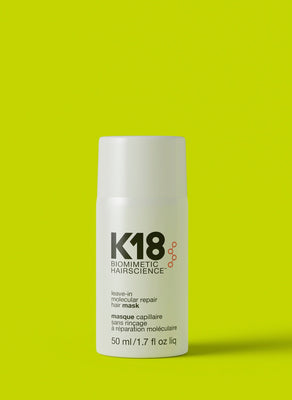
To strengthen fragile strands while you address the cause, a molecular repair treatment is a smart daily ally.
[product-feature="k18-leave-in-molecular-hair-mask-5ml-keratin-chains"]
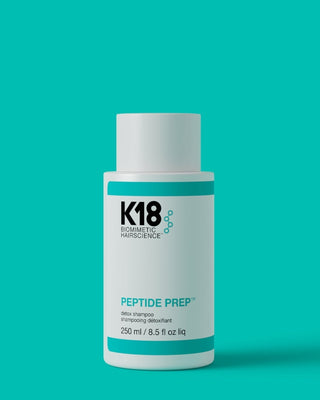
Pair it with a gentle, supportive wash-day routine designed to protect thinning hair rather than strip it.
[product-feature="k18-peptide-prep-detox-shampoo"]
Explore complete routines built for repair and everyday resilience below.
[collection-carousel="treatment-routine"] [collection-carousel="maintenance-routine"]
What Are The Key Takeaways?
Perimenopausal thinning is common, understandable, and rarely a lost cause. Falling oestrogen and rising androgen sensitivity shrink follicles over time, a pattern supported by current menopause and hair research, but iron, thyroid, and nutrient issues often play a hidden role that is easy to correct.
-
Test first, so you treat the real cause rather than a guess.
-
Know the difference between temporary shedding and gradual miniaturisation.
-
Medical options, natural supports, and styling tools all have a place.
-
Protect existing strands with molecular repair to keep hair looking fuller now.
Give your plan time, track your progress, and lean on your GP or dermatologist when the signs point to something worth investigating. With the right combination of care and patience, thinner hair through perimenopause is a chapter you can manage, not a verdict you have to accept.
