

Your hair feels stiff. It snaps instead of stretching, the ends look like straw, and somewhere in the middle of a scroll someone tells you the answer is obvious, you have protein overload hair and you need to strip every strengthening product out of your routine. It is a tidy story. It is also, on the current evidence, mostly unproven.
Protein overload is the idea that too much protein in your products tips your hair out of balance and leaves it dry, rigid and prone to breakage. The fix, so the theory goes, is to swing hard the other way and drown everything in moisture. The trouble is that when you go looking for the research underneath that model, there is almost nothing there. Even consumer health reviews of the topic note how few studies exist on excess protein in hair. What there is instead is a real, repeatable feeling that a lot of people have, attached to an explanation that has never actually been tested.
So let us do the useful thing. Below is what the stiff, straw like feeling probably is, how to work out which of two very different problems you have, and why the ingredient you have been told to fear is not one ingredient at all.
Where Did The Protein Overload Idea Come From?
The concept did not start in a lab. It grew out of rule driven online haircare communities, where it travelled alongside other blanket bans on sulfates, silicones and conventional cleansing. Repeat something often enough in a tight community and it stops sounding like a theory and starts sounding like a fact.
Ask the people who formulate haircare for a living and you get a flatter answer. Protein is a conditioning agent. Reviews of hair care physicochemistry describe proteins and their derivatives as conditioning and film forming ingredients, sitting in the same functional family as silicones and other polymers used to improve smoothness, shine and manageability. Which member of that family performs best is not settled, and it depends heavily on the formula and on what you are measuring, so the popular claim that protein is simply the weakest option goes further than the evidence does.
Why The Balance Model Falls Apart
What the science does not support is treating protein and moisture as opposing forces. Water genuinely changes how hair behaves, softening the protein matrix so that wet hair and dry hair are mechanically different things. That part is real. What does not follow is the idea of two rival inputs you must keep in equilibrium, one of which is a conditioning ingredient and the other of which is water.
Look closely at almost any protein treatment on the shelf and you will find it is already a conditioner. It contains emollients, cationic conditioning agents and slip. If protein and moisture were genuinely opposed, a single bottle could not contain both and still work. The model also has to explain how the same class of ingredient can allegedly make hair too stiff and too soft, which is a fairly large hole for a diagnostic framework to have.
None of that means your experience was imagined. It means the label on it is doing more work than it can carry, and a shaky label sends you to the wrong fix.
What Is Actually Making Your Hair Feel Stiff?
Three explanations account for nearly everything people describe as protein overload, and only one of them involves protein at all. Worth flagging up front that the first two are working explanations rather than tested ones, because nobody has run a proper study comparing them.
Buildup, Not Overload
The most plausible explanation is simple product buildup. Layers of conditioning agents, film formers, styling polymers and mineral deposits accumulate on the cuticle until hair feels coated, heavy and oddly rough at once. Both halves of that are individually well documented, since hair does accumulate surface residue and clarifying washing does remove it. What has not been tested is whether this accounts for most protein overload reports specifically, so treat it as the strongest available candidate rather than a proven verdict. It does line up neatly with who reports the problem most, since it clusters among people who have minimised or removed proper cleansing from their routine.
A Formula That Does Not Condition Well Enough
Brittleness after a protein heavy product may be a shortfall rather than an excess. If a formula leans on protein and skimps on the conditioning agents that deliver slip and softness, hair can come out feeling rigid. This one is a formulator's explanation rather than a demonstrated finding, and it is fair to say the published evidence does not clearly back it over the simpler reading that there was too much protein. Hold it loosely. It is still useful, because it explains why two products with near identical protein claims can feel completely different on the same head.
Real Structural Damage
This is the one with proper evidence behind it. Bleach, permanent colour, hot tools, chlorine and long Australian summers all break bonds inside the strand. A review of chemical bonds and hair behaviour confirms that chemical processing damages internal bonds and cuticle structure, with heat and chlorine adding porosity and dryness on top, producing brittleness, lost elasticity and breakage. That is precisely the symptom list attributed to protein overload. If you have lightened your hair recently, the odds strongly favour the structural damage that lightening leaves behind over anything your conditioner did.
How Do You Tell Buildup From Damage?
This is the question worth answering, because the two demand opposite responses. Buildup needs taking off. Damage needs repairing. Do the wrong one and you make the problem worse, which is exactly what happens when someone with genuinely weakened hair strips their routine bare and waits for it to recover on its own.
Start with a wet strand. Take one shed hair, hold it at both ends and stretch it gently.
-
Snaps almost instantly with no give, that points to damage or dryness inside the strand.
-
Stretches a long way, feels gummy and does not spring back, that points to weakened bonds and over softened hair.
-
Stretches a little and recovers, your hair is behaving normally and the problem is on the surface.
If your hair feels stretchy and slack rather than brittle, the fix is different again, and what to do about overly elastic hair is the more relevant read. If it has gone soft and mushy when wet, how to deal with gummy hair covers that state properly.
|
Signal |
Surface buildup |
Structural damage |
|---|---|---|
|
How it feels dry |
Coated, waxy, roughness that sits on top |
Porous and thirsty right through the strand |
|
Response to a clarifying wash |
Noticeably better within one wash |
Little change, or slightly worse |
|
Shine |
Dull and film like, even when clean |
Uneven, with rough patches and flyaways |
|
Recent history |
Heavy styling products, skipped cleansing, hard water |
Bleach, permanent colour, hot tools, chemical services |
|
What fixes it |
Cleanse thoroughly, then rebuild the routine |
Repair the bonds, then protect them |
|
Timeframe |
One wash |
Weeks, with consistent care |
Run the clarifying test first. It is cheap, it takes one wash, and it either solves your problem or eliminates the most likely cause. That single step tells you more than a month of reading symptom lists.
Are Proteins, Peptides And Amino Acids The Same Thing?
No, and this is where the whole fear loses its footing. The protein overload conversation treats hydrolysed proteins, peptides and amino acids as one category, when they are not one category at all.
Size Changes Everything
Hydrolysed proteins are protein fragments, and they vary enormously in size. Amino acids are the individual building blocks. Peptides are short, precisely defined chains sitting between the two. That size hierarchy is straightforward, and work on functional proteins and peptides for hair cosmetics describes how differently these behave in a formula.
The neat version you will read online, that big proteins stay outside and small peptides go inside, is a simplification. Smaller hydrolysed fragments, peptides and amino acids can all penetrate to some degree, and larger fragments are the ones most likely to remain on the surface. Size drives the behaviour, but it is a gradient rather than a hard boundary. What holds is the practical point, that a large surface sitting fragment and a targeted peptide are doing different jobs in different places, so judging them by the same standard is like refusing all liquids because you once had a bad coffee.
Where K18 Sits
K18PEPTIDE is not a hydrolysed protein and it is not a conditioning film. By the brand's own published account it emerged from a decade of work mapping the keratin genome, and it is a short chain designed to reconnect broken keratin chains inside the cortex. Being straight about the status of that, the discovery story and the precise mechanism come from K18's own science and patent material rather than from independent published trials, so it is the company's account rather than an externally verified one. What is consistent across the material is the design intent, which is a peptide small enough to work within the strand rather than a coating that sits on it. On that logic more of it does not make hair stiffer, because once the bonds it can reach are reconnected, the job is done.
[tip-text="Before you strip your routine, do one clarifying wash and reassess. If your hair feels dramatically better, you had buildup, not protein overload."]
How Long Does Straw Like Hair Take To Recover?
Realistically, less time than you fear. Where people describe a genuinely bad reaction to an intensive treatment, the rough phase tends to pass within three to four weeks even with no corrective routine, simply because normal washing and new growth do the work. Be a little careful with the stronger version of that claim though. Research on how long hair care residue is retained shows most residues clear within a wash or a few, but some deposits can persist when product use is heavy and repeated, so a blanket assurance that nothing from two months ago could still be there goes too far.
What Deserves Genuine Caution
The reports that hold up best are not about everyday shampoos and conditioners that happen to list a protein. They are about strong, salon style treatments used back to back when hair did not need a second round, or about layering several intensive products at once. That is a narrow risk, and it does not justify stripping your whole routine.
Individual variation is real too. Some hair sails through repeated protein rich products with no change at all, while other hair reacts to a single layered combination. Fine, low porosity hair is generally reckoned to feel weighed down faster than coarse or high porosity hair, though that comes from styling experience rather than clinical work, and low porosity hair can still benefit from some protein. Watch your own results rather than following a rule written for someone else's head.
What The Research Actually Shows
Here is the plain version of what stands up and what does not.
-
Structural damage is the well evidenced part. Bleach, colour, heat and chlorine measurably break bonds and roughen the cuticle, and that produces exactly the dryness and snapping people blame on protein.
-
Protein is a conditioning ingredient. That much is established in the formulation literature, which places proteins alongside silicones and polymers rather than opposite to moisture.
-
Protein overload itself is untested. No controlled study has confirmed it and none has ruled it out, so anyone stating it flatly in either direction is ahead of the evidence.
-
The buildup explanation is plausible but unproven. Surface residue and the effect of clarifying are both documented, yet nobody has shown this is what most protein overload reports actually are.
-
Expert opinion is genuinely split. Some sources treat it as a real and commonly reported effect, while science focused analysis argues the online concept is not an established condition even though the symptoms are real.
-
Brand mechanisms deserve the same scrutiny. Peptide repair claims, including timing figures, largely rest on manufacturer material rather than independent trials.
What To Do Next
Here is the sequence that actually works, in order.
-
Clarify once with a proper detoxifying shampoo and assess your hair dry, not wet.
-
If it feels transformed, you had buildup. Rebuild a routine with adequate cleansing and stop avoiding it.
-
If it still feels brittle and snappy, you have damage, and the answer is repair rather than more surface conditioning.
-
Follow repair with everyday protection, since new damage undoes the work faster than any treatment can rebuild it.
-
Change one thing at a time so you can tell what is working.
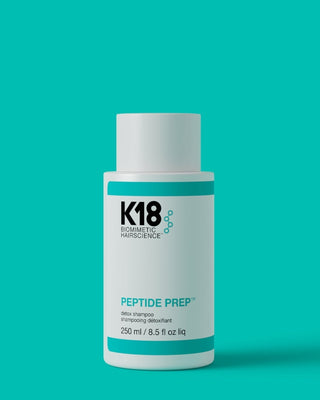
To take buildup and mineral deposits off in a single wash, start with the peptide prep detox shampoo. It is the diagnostic step and the reset in one.
[product-feature="k18-official-retail-peptide-prep-detox-shampoo"]
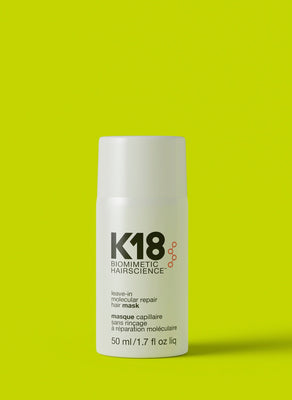
If the verdict is damage, the leave in molecular repair mask is designed to work inside the strand rather than layering another coating on top, and the brand puts the treatment time at four minutes. For hair that has been through lightening, the full recovery routine for damaged bleached hair sets out the longer plan.
[product-feature="k18-retail-leave-in-molecular-repair-hair-mask-50ml"]
[collection-carousel="treatment"]
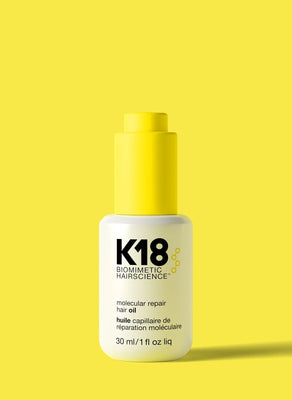
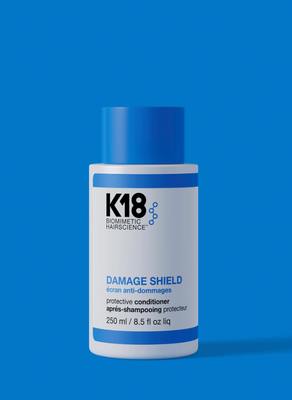
For the everyday layer, a damage shielding conditioner supplies the slip and softness that stiff feeling hair is usually short of, and a molecular repair oil handles surface smoothness without weight. If your hair has changed texture and strength for reasons that have nothing to do with products, the guide to hormonal change and hair is worth reading before you blame your conditioner.
[collection-carousel="shampoo"]
The Honest Takeaway
Protein overload is a real feeling wearing a name it has not earned. Your hair being stiff, dull and snappy is genuine, and it deserves a genuine answer rather than a rule inherited from a forum. The likeliest answers are buildup, an underpowered formula, or damage that needs repairing, and the way to find out is one clarifying wash rather than a shelf clearout.
It is worth saying plainly that the science here is thin on all sides. No controlled study has confirmed protein overload, and none has ruled out that some people react to something in protein heavy formulas. Some cosmetic chemists still think there is something to it. Anyone who tells you the matter is settled, in either direction, is ahead of the evidence, and that includes anyone selling you a solution.
What is solid is the mechanism you can act on. Cleanse properly, repair what is broken at the bond level, protect it afterwards, and judge everything by how your hair behaves rather than by which words appear on the label. Hair like new is not a matter of avoiding ingredients, it is a matter of using the right one in the right place.
