

Most people describe their hair as thick or thin without knowing which thing they actually mean. They might have plenty of hair packed close together, or they might have fewer strands that happen to be wide. Those are two different measurements, and the word people reach for, density, only describes one of them. If you want to make sensible decisions about your hair, the first step is learning to read your own density properly and understanding why it shifts as you get older.
What hair density actually means
Hair density is the number of follicles in a given patch of scalp, usually measured per square centimetre. On a healthy scalp the figure sits somewhere between roughly 124 and 200 follicles per square centimetre, with most adults landing in that band. Trichologists count it with a magnified scalp camera, but the principle is simple: it counts how many strands grow from an area, not how big each strand is.
That distinction matters because density gets confused with two other traits all the time. Strand thickness, sometimes called diameter or calibre, is how wide a single hair is, which is what people mean when they call hair fine or coarse. A fine-haired person can still have high density, and a coarse-haired person can have low density. Porosity is a third trait entirely: it describes how easily the cuticle lets water and product move in and out, which depends on how raised or damaged the outer layer of the strand is. You can have high density, fine strands and high porosity all at once, and each one calls for a different response.
| Trait | What it measures | How to test it | What changes it |
|---|---|---|---|
| Density | Follicles per square centimetre, roughly 124 to 200 on a healthy scalp | Parting width, ponytail circumference, how much scalp shows in bright light | Genetics, ageing, hormones, breakage that mimics fewer strands |
| Strand thickness | The width of one individual hair (fine to coarse) | Roll a single strand between your fingers, or compare it to a sewing thread | Genetics, age-related miniaturisation, nutritional and hormonal status |
| Porosity | How readily the cuticle absorbs and releases moisture | Float a clean strand in water, or watch how fast hair soaks when wet | Heat, colour, bleach, mechanical wear that lifts or breaks the cuticle |
A simple at-home self-check
You do not need a clinic to get a rough reading. Three quick tests give you a useful picture, and doing all three together beats relying on any single one.
- The parting test. Part your hair down the middle in good natural light and look at the width of the scalp line. A thin line that stays narrow from front to crown suggests healthy density. A line that widens noticeably toward the crown can point to lower density in that zone, which is where age and hormonal change tend to show first.
- The ponytail circumference test. Gather dry hair into a ponytail and measure around it with a soft tape, or simply note where your hair tie sits. Average ponytails fall around 10 to 13 centimetres in circumference. Tracking the same measurement every few months tells you more than any one reading, because you are watching the trend in your own hair.
- The scalp-visible-in-light test. Stand under a bright overhead light and look at your crown in a mirror or a phone photo. If the scalp reads through clearly across the top while the sides stay full, that pattern of difference is worth noting, since even density usually means scalp shows roughly the same everywhere.
None of these gives you a follicle count. What they give you is a baseline you can repeat, which is the honest way to spot real change rather than a bad-light day.
Why density changes over a lifetime
The biggest single factor is genetics. The pattern you inherited sets your baseline follicle count and how sensitive those follicles are to hormones, and no product rewrites that. On top of that baseline, several things move the number around.
Age is the steady one. Follicle activity declines gradually through adulthood, and individual follicles can shrink in a process called miniaturisation, where each new strand grows finer and shorter than the one before. The result reads as lower density even when the follicle count has barely moved, because thinner strands cover less scalp.
Hormones drive the sharper swings. After giving birth, many women shed heavily for a few months as a large batch of hairs that stayed put during pregnancy all enter the resting and shedding phase together. This is telogen effluvium, and for most people it recovers. Around menopause, falling oestrogen shifts the balance and can reduce density more lastingly. Thyroid problems and iron deficiency push in the same direction, which is why a blood test is a reasonable early step when shedding seems out of proportion.
The factor people miss is breakage that fakes low density. When strands snap halfway down rather than falling from the root, you keep the same number of follicles but lose length and body, and hair looks sparser. Bleach, hot tools, tight styling and rough brushing all cause this. The follicles are still there, which means this kind of thinning responds well to gentler handling and stronger strands.
Appearance versus true follicle count
Here is the line worth being honest about. Topical products and good haircare improve how dense your hair looks and protect the strands you already grow. They do not create new follicles. Nothing you apply to the surface of your scalp builds a follicle that was not there, and any product implying otherwise is overselling.
What you can genuinely influence:
- Keeping every existing strand intact instead of losing length to breakage, so your hair carries more visible volume.
- Supporting a clean, balanced scalp so follicles work in a healthy environment.
- Reducing the daily mechanical and chemical wear that thins strands over time.
- Improving how light reflects off smoother cuticles, which reads as fuller hair.
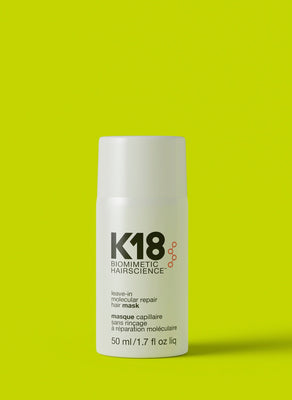
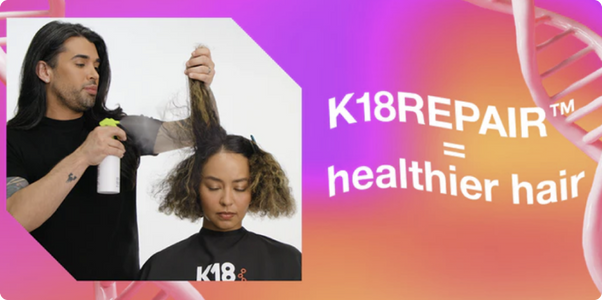
This is where bond-building earns its place. Bleaching, heat and even ordinary wear break the keratin bonds that hold each strand together, and broken bonds are weak points where hair snaps. The K18PEPTIDE was designed to reach into the strand and help reconnect those broken keratin chains, which keeps the strand whole. A whole strand holds its length and thickness, so the density you already have keeps showing up instead of shedding away through breakage. Gentle scalp care does the same job from the other end, looking after the conditions follicles grow in.
[product-feature="k18-retail-leave-in-molecular-repair-hair-mask-50ml"]
How to read a hair density serum sceptically
Search "hair density serum" and you will find hundreds of products promising thicker hair. Some are worth your money and some are not, and the difference comes down to what they claim and whether they show evidence. Read the category with a careful eye.
A serum can realistically condition the scalp, support strand strength, and in some cases create temporary volume that makes hair look denser while you use it. Ingredients like caffeine, peptides and certain plant extracts have research behind them for supporting hair, though effects are usually modest and need consistent use. Minoxidil is the one topical with strong clinical evidence for actually affecting hair growth, and it is regulated as a medicine in Australia for that reason, so a cosmetic serum is not the same thing.
What a density serum cannot do is manufacture follicles or reverse genetic pattern thinning on its own. When you read the marketing, separate "looks fuller" claims from "grows more hair" claims, and check whether any growth claim points to a published study or just to before-and-after photos. The honest products tell you what they protect and improve rather than promising a new head of hair.
Where Future IQ fits
K18 is bringing this thinking into a science-led range called Future IQ, launching in July, built around density, shedding and pigment. It is being developed with clinical data behind its claims rather than vague promises, which is the standard worth holding any density product to. We will share the specific results once the range is live, so you can judge it the same sceptical way you would judge anything else in this category.
In the meantime, the most effective thing you can do for the density you have is keep your existing strands strong and your scalp healthy. Run the three self-checks, track them over a few months, and treat any sudden shedding as a reason to see your GP or a trichologist rather than to panic-buy.
[collection-carousel="treatment"]
The short version
Density is how many follicles you have per square centimetre, and it is not the same as how thick each strand is or how porous your hair feels. It changes with genetics, age, hormones and breakage, and only some of those are within your control. Good haircare and bond-building protect what you already grow and make it look fuller, while honest products are clear that they cannot create new follicles. Read every density claim with that frame, measure your own hair over time, and you will make better calls than any single marketing line could give you.
