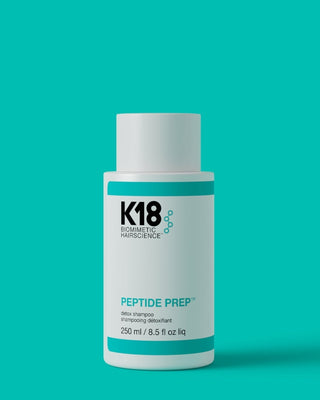
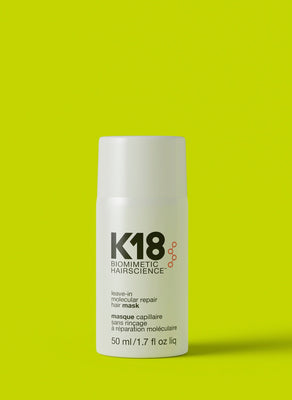
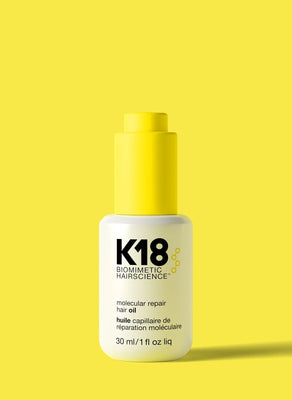
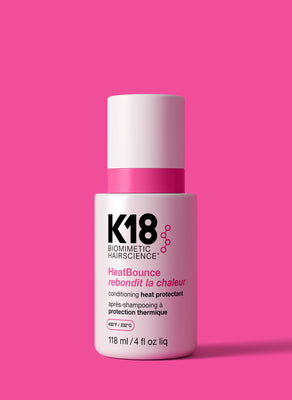


Walk through any pharmacy or salon retail shelf and you will find a row of small bottles promising fuller, denser hair. The labels read like a clinical journal. The price tags read like a small luxury. Whether any of it works depends almost entirely on what is inside, and the category name on the front of the bottle tells you very little about that.
If you are asking whether a hair density serum can help you, the honest answer starts with a definition, because the word 'density' is doing a lot of quiet work here.
What a density serum actually is
'Density serum' is a marketing category, not a regulated one. No standards body in Australia or anywhere else defines what a product must contain, or prove, before it can carry that name. The Therapeutic Goods Administration regulates products that make therapeutic claims about hair growth, but a cosmetic serum that talks about the look and feel of fuller hair sits outside that net. So two bottles sharing the same shelf label can hold completely different formulas with completely different evidence behind them.
That matters because density, in the strict sense, means the number of hair follicles per square centimetre of scalp. A topical serum cannot change that number. You are born with a follicle count, and ageing, genetics and hormones decide how many stay active. What a good serum can influence is the diameter, strength and surface condition of the fibres you already grow, plus the health of the scalp those fibres come from. Thicker, less broken, better anchored hair reads as denser hair, even when the follicle count has not moved.
Keep that distinction in mind for everything that follows. A serum works on the hair and scalp you have. It does not manufacture new follicles.
Do hair serums work, ingredient by ingredient
The useful question is not "do hair serums work" in general. It is which ingredient is doing the work, and how good the evidence for it really is. Some actives have peer-reviewed human trials. Some have only the data the supplier who sells the ingredient chose to publish. The table below sorts the common ones.
| Ingredient | What it claims | Strength of evidence |
|---|---|---|
| Peptides (signalling) | Send messages to skin and follicle cells, supporting the scalp environment and fibre quality | Mechanistically plausible, with growing lab and early human data; quality varies enormously by the specific peptide |
| Caffeine | Counters the effect of DHT on the follicle when applied topically | Limited. A few small studies and lab work, no large independent trial settling the question |
| Rosemary oil | Stimulates growth comparable to low-dose minoxidil | One 2015 trial of 100 people over six months found it roughly matched 2% minoxidil; a single small study, not a body of proof |
| Procapil and Redensyl | Reduce shedding and improve fibre count | Mostly manufacturer-funded data. Independent replication is thin |
| Minoxidil and finasteride | Genuine regrowth in pattern hair loss | Strong. These are regulated medicines a doctor or pharmacist manages, not cosmetic serum ingredients |
Read that last row carefully. The actives with the deepest evidence for actual regrowth are prescription or pharmacist-only, and they come with monitoring, side effects and a clinician in the loop. A cosmetic serum is a different tool for a different job. When a serum borrows the language of those medicines without the regulation behind them, that is the moment to slow down.
Why peptides earn their place
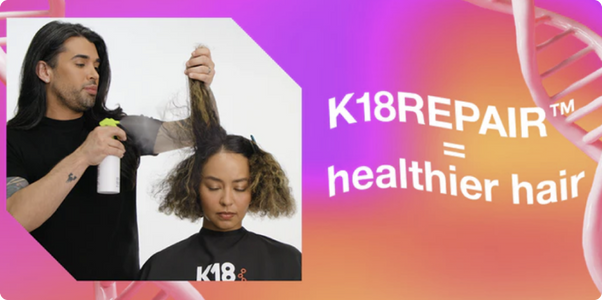
Peptides are short chains of amino acids, the same building blocks that make up keratin, the structural protein of hair. The interesting ones act as signals rather than simple ingredients you slather on for moisture. Some support the scalp barrier. Some are designed to influence the cells around the follicle. The category that K18 knows best is bond repair, where the K18PEPTIDE works inside the hair fibre to reconnect broken keratin chains, the damage left behind by colour, bleach, heat and daily friction.
That bond-repair work matters to the density conversation for a plain reason. A large share of what people read as thinning is breakage. Hair that snaps mid-length looks sparse, frizzes at the surface and never reaches the length that would make the head look full. Stop the breakage and the same head of hair looks denser within weeks, with no change to the follicle at all.
[product-feature="k18-retail-leave-in-molecular-repair-hair-mask-50ml"]
How to read a density serum label
Most of the skill in buying one of these products is reading past the design. A few patterns reliably signal that the marketing has run ahead of the science.
- Before-and-after photos where the lighting, parting or camera angle has changed between shots. Fuller-looking hair in warmer, more even light is a photography result, not a clinical one.
- "Clinically proven" with no published study you can find. A real trial has a number of participants, a duration and somewhere it was written up. If none of that is on the page or in a citation, the phrase is decoration.
- Percentages with no denominator. "92% saw fuller hair" means little until you know that 92% of how many people, measured how, over how long.
- Results quoted from a study on the raw ingredient, not the finished product, often at a concentration the serum never discloses.
- A long active list where each useful ingredient sits so far down the formula that it is present in a trace amount.
None of these patterns prove a product is useless. They tell you the brand is selling the dream harder than the data, and that your money is better spent on a formula willing to show its working.
Where a serum fits in a real routine
A serum is one part of a system, and the parts around it decide whether it gets a fair chance. The look of fuller hair comes from several habits working together rather than a single bottle.
- Gentle cleansing. Harsh surfactants and aggressive towel-drying create the surface damage that makes hair look thin and feel rough.
- Bond building. Repairing the broken keratin links inside the fibre stops breakage from faking low density, which is the fastest visible win for most people.
- Scalp care. A serum has to land on a healthy scalp to do anything. Flaking, excess oil and irritation all work against a fuller result.
- Heat and colour discipline. Lower iron temperatures and more careful colour spacing reduce the damage load the rest of your routine has to repair.
- Patience and consistency. The hair growth cycle runs in months, so a fair trial of any serum is a season, not a fortnight.
If you are weighing up the best serum for hair density, judge it inside this picture. A serum cannot rescue hair that is being broken faster than it can be repaired, and no routine fixes a follicle problem that belongs with a doctor.
Where K18 Future IQ fits
K18 built its name on one peptide and one job, doing molecular repair well and saying little else about it. Future IQ, launching in July, extends that science-led approach into density, shedding and pigment. The plan is to lead with clinical data and let the numbers carry the claims, rather than reaching for the hype the rest of this article has warned you about.
That is a deliberately modest promise. A peptide hair serum can support the scalp and improve the condition of the hair you grow. It will not invent follicles, and any honest brand will tell you so before you reach for your card. When Future IQ arrives, the data will be published for the same scrutiny applied above, which is the only kind of claim worth paying salon-grade prices for.
Until then, the highest-value move for most people is the unglamorous one. Stop the breakage, look after the scalp, and let the density you already have show itself.
[collection-carousel="treatment"]
