

If you have noticed more hair on your brush, in the shower drain or wrapped around the vacuum head lately, you are not imagining it. Hair shedding tends to step up after 40, and for many women it lines up with the years around perimenopause and menopause. The good news is that some of what is happening is normal and reversible, some of it is slower and more progressive, and quite a lot of it responds to the right changes. This article walks through what shifts in the hair cycle after 40, how to tell ordinary shedding apart from real thinning, and what genuinely helps.
What actually changes in your hair after 40
Every hair on your head moves through a cycle. It grows for a few years (the anagen phase), then briefly transitions, then rests and falls out (the telogen phase) so a new hair can take its place. At any given time most of your hair sits in the growth phase. After 40, two things start to work against you.
First, the anagen phase shortens. Hairs spend less time actively growing and a larger share of your head sits in the resting phase, which means more hairs reaching the end of the line and dropping out. Second, individual follicles begin to miniaturise. A follicle that once produced a thick, pigmented strand starts producing a finer, shorter, often paler one, until some follicles stop producing a visible hair at all. Growth rate slows too, so the hair you do keep takes longer to reach the length it used to.
Hormones drive a lot of this timing. As oestrogen falls through perimenopause and into menopause, its protective effect on the hair cycle weakens. Oestrogen helps keep hairs in the growth phase for longer, so when it drops, more hairs shift to resting and shedding. At the same time the relative influence of androgens rises, and in follicles that are genetically sensitive to androgens, that tips them further toward miniaturisation. This is why so many women first notice a change in their hair in their mid-40s to mid-50s.
Increased shedding versus progressive thinning
This is the distinction worth getting right, because it changes what you should do. Telogen effluvium is a temporary surge in shedding. Something pushes a larger than usual batch of hairs into the resting phase all at once, and roughly two to three months later they fall out together. Common triggers include a high fever or illness, surgery, a crash diet, childbirth, severe stress, low iron, or a thyroid problem. It can be alarming because the volume is obvious, but the follicles themselves are healthy and the hair usually grows back once the trigger is resolved.
Female pattern hair loss is different. Here the follicles are progressively miniaturising, so rather than a dramatic dump of hair, you see a gradual loss of density over months and years. The part line widens, the ponytail feels thinner, and you can often see more scalp through the hair at the crown. It does not resolve on its own, which is exactly why catching it early matters.
Many women over 40 have a bit of both at once, which is part of why it can feel confusing. The table below lays out the practical differences.
| Feature | Telogen effluvium (shedding) | Female pattern hair loss (thinning) |
|---|---|---|
| Typical cause | Illness, stress, low iron, thyroid, childbirth, crash diet | Genetics plus hormonal shift and follicle miniaturisation |
| How it looks | Sudden general increase in hairs falling out all over | Gradual loss of density, wider part, thinner ponytail |
| Timeline | Often starts 2 to 3 months after a trigger, usually temporary | Slow and ongoing over months to years |
| What helps most | Find and fix the trigger, support with nutrition and time | Early medical assessment and treatment, plus daily protection |
Why is my hair falling out in this pattern
Where the hair goes thin is a useful clue. Female pattern loss spreads diffusely across the top of the scalp while the frontal hairline usually stays put. The classic sign is a part line that looks wider at the crown than at the front, sometimes described as a Christmas-tree shape. Male pattern loss behaves differently, with a receding hairline at the temples and a thinning crown that can progress to a bald patch. Knowing your distribution helps you and your GP describe what is happening and rules some causes in or out.
The medical work-up worth doing
Before you spend money on products, it is worth ruling out the treatable causes, because several common ones are easy to test for and fix. Book a GP appointment and ask about the following blood tests.
- Ferritin, which reflects your iron stores. Low iron is one of the most common and most missed contributors to shedding in women, and it is straightforward to correct.
- Thyroid function (TSH and related markers). Both an underactive and overactive thyroid can cause hair to fall, and thyroid issues become more common with age.
- Vitamin D, which sits low in a large share of Australian adults despite the climate and has links to hair cycling.
- A full blood count and, where relevant, markers your GP may add based on your history, such as those related to androgen levels.
If the bloods come back clear and the thinning is progressive, ask for a referral to a dermatologist. Dermatologists can confirm female pattern hair loss at 40, discuss evidence-based options such as topical minoxidil and, in some cases, prescription medicines, and set realistic expectations about timing. Treatments that act on follicle miniaturisation work best when started early, so an unhurried conversation now beats waiting another two years to see if it settles.
What lifestyle and haircare genuinely help
No shampoo regrows a dead follicle, and any honest brand will tell you that. What daily habits can do is feed the hair you are growing, reduce the breakage that makes thin hair look thinner, and protect the strands already on your head. These changes are worth making whether your issue is shedding, thinning or both.
- Eat enough protein. Hair is built from keratin, a protein, and very low intake shows up at the scalp. Spread protein across the day with eggs, fish, lean meat, dairy, legumes, tofu or nuts.
- Keep iron and overall nutrition steady. If you menstruate heavily, follow a restrictive diet or eat little red meat, pair iron-rich foods such as legumes and leafy greens with a source of vitamin C, and let your ferritin result guide whether you need more.
- Look after the scalp. It is living skin, so keep it clean, avoid letting heavy product and oil build up at the roots, and treat any persistent flaking or itch rather than ignoring it.
- Cut back on breakage. Lower the heat on your styling tools, use a heat protectant, loosen tight ponytails and slick buns that pull at the hairline, and be gentle when hair is wet, which is when it is weakest.
- Protect each strand with bond-building. When hair is already finer and more fragile, losing length to mid-shaft snapping makes thinning more obvious. Repairing the internal bonds in the hair helps strands hold together and look fuller.
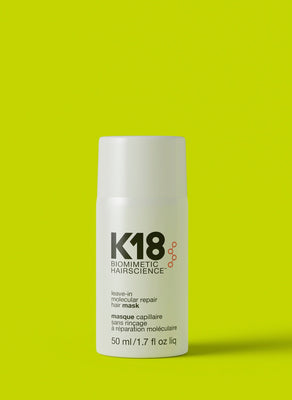
That last point is where K18 fits. The K18PEPTIDE works inside the hair to help rebuild the broken keratin bonds that heat, colour, bleach and daily wear leave behind, which keeps existing strands stronger and less prone to breaking off. It will not change what is happening at the follicle, but for hair that has become finer and more vulnerable with age, protecting every strand you keep is a sensible piece of the picture.
[product-feature="k18-retail-leave-in-molecular-repair-hair-mask-50ml"]
There is also a more targeted option on the way. K18 Future IQ is a science-led range launching in July, developed specifically around the changes that come with ageing hair, including density, shedding and pigment. It is built as a research-driven complement to the medical and lifestyle steps above rather than a replacement for them, and it is worth keeping an eye out for if these are the concerns you are dealing with.
[collection-carousel="bestsellers"]
Putting it together
If you are over 40 and your hair feels different, start by working out which problem you have. A sudden, all-over increase in shedding points to telogen effluvium, often has a trigger you can find and fix, and tends to recover. A slow, steady loss of density with a widening part points to female pattern hair loss, which rewards early action. Either way, the same foundations apply. Get your ferritin, thyroid and vitamin D checked, eat enough protein, treat your scalp as skin, reduce the heat and tension that snap fragile strands, and protect the hair you have with bond repair. None of it is a miracle, but together it is the difference between watching your hair change and doing something about it.
